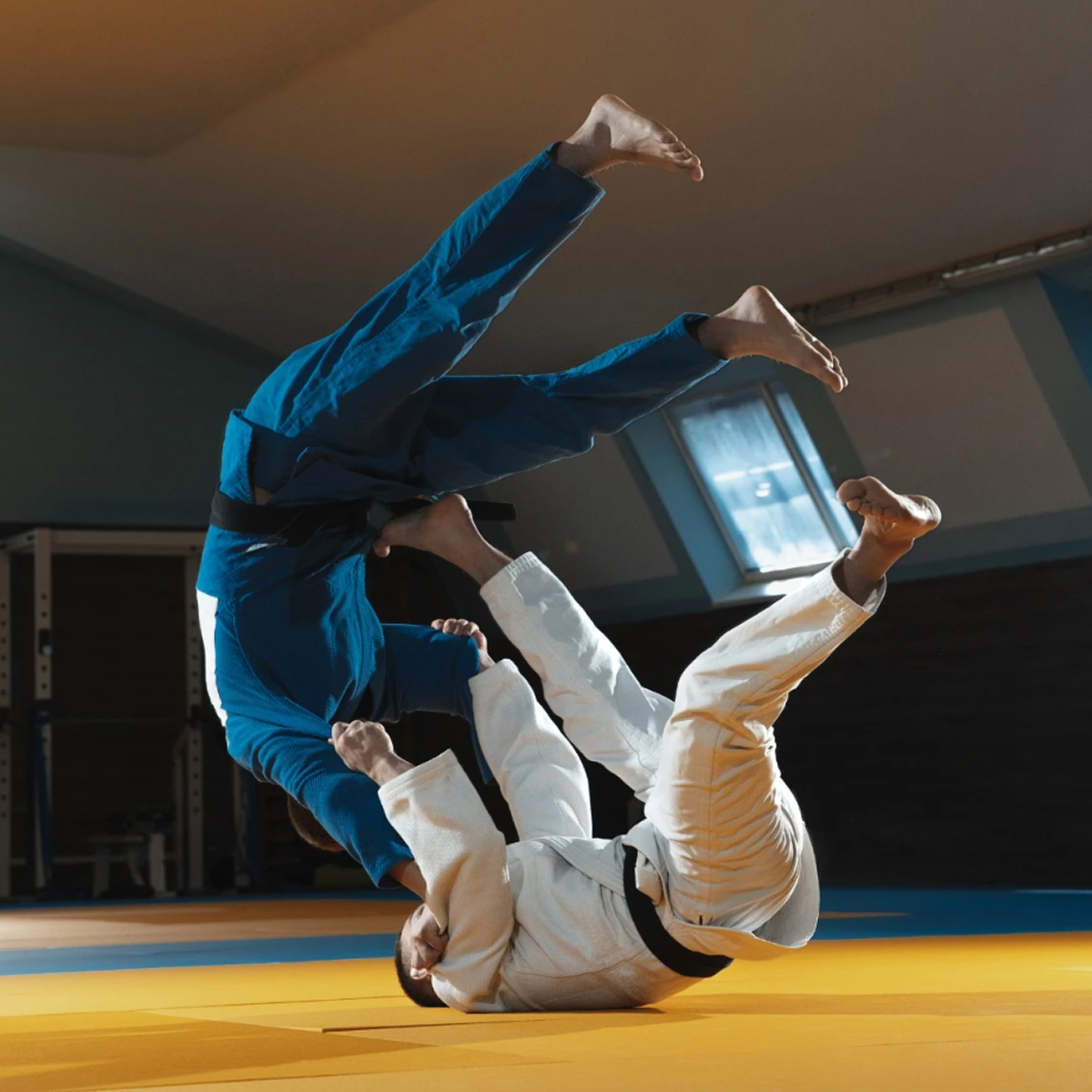
Brazilian Jiu-Jitsu is more than a martial art focused on grappling and submissions. Rooted in Japanese judo and developed in Brazil, BJJ combines leverage, positional control, and technical skill to overcome resistance. From learning basic ground positions and escapes to mastering submissions and defensive movements, training builds coordination, endurance, and body awareness. Whether practiced for fitness, self-defense, or competition, Brazilian Jiu-Jitsu offers a challenging way to develop both physical ability and strategic thinking.
A fighter is pinned beneath an opponent who appears to have complete control. Then he shifts his hips, catches an arm, and reverses the position. Seconds later, the athlete who was winning is defending a submission. In Brazilian Jiu-Jitsu, a small adjustment can change an entire match.
Brazilian Jiu-Jitsu, or BJJ, is a grappling martial art built around leverage, positional control, and submissions. Some people train to compete, others for fitness or self-defense. Whatever brings them to the mat, they learn to solve physical problems against opponents who are actively resisting.
Ground fighting is central to BJJ, but takedowns, defensive movement and tactical decisions matter too. The rules explain why certain positions are valuable and how competitors turn control into victory.
What Is BJJ?
Brazilian Jiu-Jitsu is a grappling martial art in which competitors use positioning, leverage and pressure to control opponents. The objective is to secure a submission or, under points-based rules, finish with a higher score.
BJJ is often associated with the idea that technique can overcome strength. A skilled lightweight may control a larger beginner, but size and athleticism still matter, particularly between equally experienced competitors.
Several features distinguish BJJ:
- Ground fighting: Athletes work to improve their position or escape control on the mat.
- Positional control: Mount, back control and other dominant positions create attacking opportunities.
- Leverage: Body angles and weight distribution help generate pressure efficiently.
- Live resistance: Training partners actively defend, counterattack and change positions.
- Submissions: Joint locks and chokes can force an opponent to concede.
Standing grappling is also important. Competitors may use throws and takedowns or pull guard to bring the action to the ground.
Defensive skills form the foundation of training. Without reliable escapes and guard recovery, even a technically skilled attacker may struggle to create submission opportunities.
History and Origins of Brazilian Jiu-Jitsu
Brazilian Jiu-Jitsu developed in Brazil during the early twentieth century, drawing heavily from Japanese judo and earlier jujutsu traditions.
Mitsuyo Maeda, a Japanese judoka who traveled internationally teaching grappling, arrived in Brazil in 1914. Carlos Gracie is traditionally identified among those who learned from him, although historical accounts differ in some details.
Carlos and other Gracie family members helped establish schools and promote the developing style. Hélio Gracie became particularly well known through teaching and challenge matches.
The sport’s history extends beyond one family. Luiz França, Oswaldo Fadda and other instructors contributed to Brazilian grappling through their own schools and teaching methods.
Throughout the twentieth century, Brazilian fighters tested their techniques against practitioners of different martial arts. These encounters encouraged an emphasis on controlling resisting opponents and securing submissions.
BJJ reached a wider international audience in the 1990s. Royce Gracie’s victories at the early Ultimate Fighting Championship events demonstrated how effective ground grappling could be against opponents from other disciplines.
As academies opened worldwide, organized competition expanded. The International Brazilian Jiu-Jitsu Federation (IBJJF) became a major influence, although many tournaments follow different regulations.
Modern BJJ includes gi and no-gi competition, with techniques continuing to evolve through exchanges with wrestling, judo and other grappling sports.
BJJ Rules and How a Match Works
BJJ rules differ depending on the organization, age division, belt level and competition format. IBJJF regulations are among the most widely used.
Matches normally begin with both athletes standing. Competitors may attempt takedowns, pull guard, or work toward a stronger position.
Under standard IBJJF rules, points are awarded for specific actions:
| Action | Points |
|---|---|
| Takedown | 2 |
| Sweep | 2 |
| Knee-on-belly | 2 |
| Guard pass | 3 |
| Mount | 4 |
| Back control | 4 |
Most scoring actions require three seconds of established control. Briefly reaching a position without meeting its requirements does not earn points.
Under IBJJF rules, a scoring sweep must originate from guard or half guard. The athlete must reverse the position, come on top and establish control. Turning an opponent over while escaping side control does not automatically qualify.
A submission ends the match regardless of the score. Competitors usually concede by tapping with a hand or foot, although verbal submissions also count. Referees may stop contests for safety reasons or rule violations.
Without a submission, the outcome may depend on points, advantages and penalties. Some organizations instead use submission-only formats or alternative judging systems.
Match duration varies. Under IBJJF adult rules, white belt matches last five minutes, while black belt matches last ten.
Legal techniques also differ by division. Heel hooks, for example, are permitted in certain advanced no-gi categories but prohibited in many others.
Main BJJ Positions and Techniques
A submission rarely appears without preparation. A competitor may recover guard, complete a sweep, pass the opponent’s legs and establish control before attacking.
The main BJJ positions offer different advantages. Some provide stability, while others create immediate submission opportunities but leave room for counters.
Guard, Mount and Control Positions
Guard is one of BJJ’s defining positions. A practitioner uses their legs to manage an opponent, usually from underneath. Closed guard wraps around the opponent’s waist, while open guard relies on hooks, grips and foot placement.
Half guard occurs when one of the opponent’s legs is trapped between the practitioner’s legs. It can lead to sweeps or guard recovery, although the top athlete may still apply heavy pressure.
Side control places one competitor across the opponent’s upper body after clearing their legs. The top athlete attempts to restrict movement and prevent guard recovery.
Mount involves controlling an opponent from above, with the legs positioned on either side of their torso. It offers strong control and several submission options.
Back control allows attacks from behind, commonly secured with leg hooks or a body triangle. Chokes are especially threatening because the defender cannot easily see the attacker’s movements.
Competitors develop different preferences. Some build their game around guard attacks, while others favor takedowns, passing and top pressure.
Sweeps, Escapes and Submissions
Sweeps reverse the top and bottom positions from guard. The scissor sweep, hip-bump sweep and butterfly sweep are common examples.
Rather than relying on strength alone, successful sweeps disrupt balance by removing support or redirecting an opponent’s weight.
Escapes require creating space without exposing vulnerable areas. Frames, hip movement and timing are particularly important beneath mount or side control.
The bridge-and-roll escape can reverse mount when the defender traps a supporting arm and leg. The elbow-knee escape creates room to recover guard or half guard.
BJJ submissions generally fall into two categories:
- Joint locks: Armbars and kimuras apply pressure to joints, forcing an opponent to submit.
- Chokes: Rear-naked chokes and triangle chokes apply pressure around the neck, commonly restricting blood flow.
An armbar attacks the elbow. A triangle choke uses the legs to trap the neck and one arm, while a rear-naked choke is commonly applied from back control.
Submissions must be practiced carefully. Students should tap before injury occurs, and the attacking partner must release immediately.
BJJ Belt System
BJJ belts recognize technical development and experience. Promotions are generally decided by instructors rather than determined by a fixed training schedule.
The standard adult progression includes five principal belt colors:
| Belt | General stage |
|---|---|
| White | Learning basic positions, movements, and defensive skills |
| Blue | Applying fundamentals against resisting opponents |
| Purple | Connecting techniques and adapting to different situations |
| Brown | Refining advanced skills and tactical decisions |
| Black | Demonstrating extensive technical knowledge and experience |
Many academies award stripes between promotions, although their requirements vary.
Children follow a separate ranking system with additional colors. Organizations such as the IBJJF also establish age and minimum time requirements for certain ranks.
Instructors may consider attendance, technical execution, defensive ability, and performance during sparring. Competition results can help, but tournament participation is not always required.
Beyond black belt, practitioners may earn additional degrees. Coral and red belts represent advanced ranks associated with long-term involvement in BJJ.
How BJJ Training Works
A typical BJJ training session combines technical instruction, partner drills and sparring. Classes often begin with movement exercises before the instructor demonstrates a technique.
Students practice in pairs, gradually adding resistance. Some classes focus on escaping a particular position, while others cover combinations or transitions.
Competitive athletes may train more frequently, adding takedown practice, conditioning and tournament preparation.
Drilling, Sparring and Rolling
Drilling involves repeating techniques with a partner. A student might practice passing guard while the partner provides limited resistance.
Positional sparring starts from a defined situation. One athlete may attempt to escape mount while the other works to maintain control. The round ends or resets when an objective is achieved.
BJJ rolling is live sparring. Both partners attack, defend and change positions without following a planned sequence.
Intensity varies. Lighter rounds allow students to experiment and recognize mistakes, while competitive sparring places greater demands on timing and endurance.
Gi vs No-Gi BJJ
The gi vs no-gi distinction affects clothing, available grips, and the techniques those grips make possible.
In gi training, practitioners wear a reinforced jacket, trousers and belt. Legal grips on the collar, sleeves and trousers help control posture and prepare attacks.
No-gi athletes generally wear rash guards and shorts. Without fabric grips, they rely more on underhooks, wrist control, body locks and direct contact.
Certain techniques are format-specific. Collar chokes are available in gi but not standard no-gi competition. Some no-gi rulesets also permit a wider selection of leg locks.
Both formats require positioning, timing and defensive awareness, although their preferred methods of control can differ.
BJJ for Beginners
The first few BJJ classes can feel unfamiliar, even for people with experience in other sports. Moving while pinned, maintaining balance under pressure and recognizing submission threats take practice.
Beginners benefit from learning fundamental movements before attempting complicated attacks. Frames, guard recovery, mount escapes and neck protection provide a useful starting point.
What to Expect From Your First Class
An introductory session may include bridging, hip escapes and transitions between positions.
The instructor demonstrates techniques before students practice in pairs. Corrections often focus on posture, grips and weight distribution.
Some academies introduce controlled rolling immediately. Others require several fundamentals classes first.
For a first session:
- Arrive early and tell the instructor you are new.
- Mention injuries or physical limitations.
- Follow guidance when choosing a partner.
- Tap promptly when caught in a submission.
- Avoid sudden movements in unfamiliar positions.
Techniques that seem straightforward during demonstrations often become harder against resistance. That adjustment is a normal part of learning.
Equipment and Basic Etiquette
Gi classes generally require a BJJ uniform and belt, although some academies lend equipment to beginners.
No-gi training typically involves a rash guard and athletic shorts without exposed zippers or pockets. A mouthguard is advisable.
Hygiene matters because students share mats and maintain close physical contact. Clothing should be clean, nails kept short and suspected contagious skin infections addressed before training.
Shoes are normally removed before entering the mat, and jewelry should be taken off.
Good training partners control submissions, communicate clearly, and respect taps. Practice is about improving technique rather than winning every exchange.
BJJ vs Other Martial Arts
BJJ shares techniques with several combat sports, but differences in scoring and permitted actions shape how athletes compete.
BJJ vs Judo and Wrestling
BJJ vs Judo
Judo emphasizes throws, gripping and control, although groundwork remains part of competition.
A throw meeting the criteria for ippon ends a judo match immediately. Victory can also come through a qualifying hold-down, choke or permitted joint lock.
BJJ generally allows longer ground exchanges, placing greater emphasis on guard work, passing and positional transitions.
BJJ vs Wrestling
Wrestling focuses on takedowns, positional control and, depending on the style, exposing or pinning an opponent’s shoulders.
Conventional freestyle and Greco-Roman wrestling do not permit submissions. Wrestlers therefore approach ground control with different objectives.
Wrestling experience helps with balance, takedowns and top pressure, but BJJ introduces guard attacks and submission threats that require adjustments.
BJJ vs Muay Thai and MMA
BJJ vs Muay Thai
Muay Thai is a striking sport involving punches, kicks, knees, elbows and clinch techniques.
BJJ concentrates on grappling and submissions, with strikes prohibited in sport competition. Muay Thai does not feature extended ground fighting.
The two disciplines develop different skills and can complement each other in broader combat training.
BJJ vs MMA
Mixed martial arts combines striking, wrestling and submission grappling. BJJ contributes ground control, positional transitions and submission techniques.
These skills require adjustments because MMA permits strikes during ground exchanges. A guard position that works in BJJ may expose a fighter to punches or elbows.
MMA athletes must also develop cage positioning, takedown defense and transitions between striking and grappling.
FAQ
Is Brazilian Jiu-Jitsu suitable for complete beginners?
Yes. Beginner classes introduce fundamental positions, escapes and submissions through supervised practice. Previous martial arts experience is unnecessary.
How often should beginners train BJJ?
Two or three sessions per week can be a manageable starting point. Recovery, fitness and personal goals should guide training frequency.
Is BJJ effective for self-defense?
BJJ develops skills for controlling opponents, escaping holds and managing ground positions. However, sport training does not fully address strikes, multiple attackers or unpredictable real-world situations.
How long does it take to earn a BJJ blue belt?
Many practitioners spend approximately one to three years at white belt. Promotion depends on technical progress, training consistency and academy standards.
Can you train BJJ without competing?
Yes. Many practitioners train for fitness, recreation, or personal development. Competition is optional at most academies.