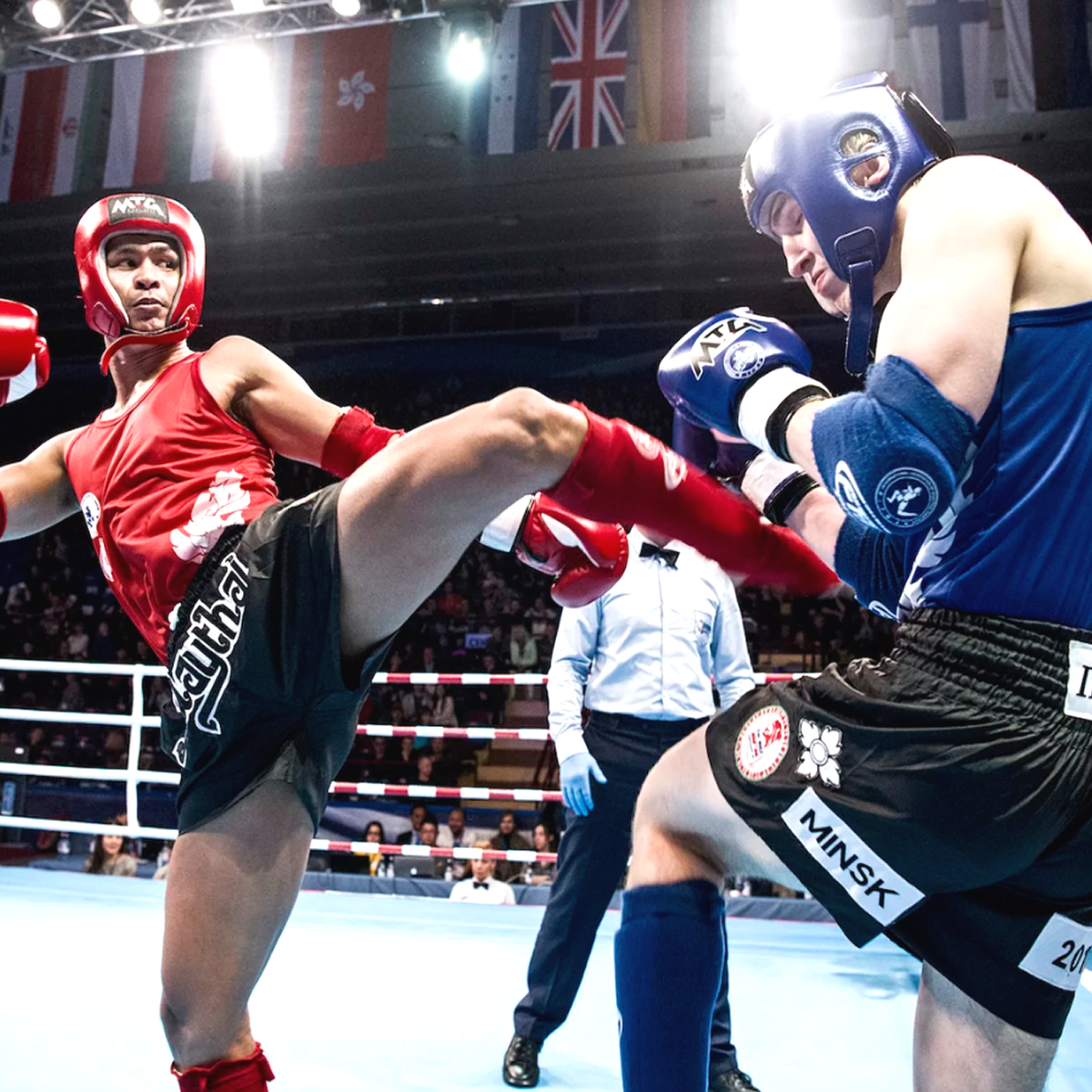
Muay Thai is more than a combat sport built around punches, kicks, knees, and elbows. Rooted in Thai fighting traditions, it combines physical conditioning with precise technique, balance, and tactical awareness. From learning basic strikes to mastering clinch control and defensive movements, training develops coordination, endurance, and discipline. Whether practiced for fitness, self-defense, or competition, Muay Thai offers a challenging way to understand both the physical and strategic sides of martial arts.
A Muay Thai fighter can spend most of a round working behind a steady jab, then change the exchange with a single body kick. At close range, the contest looks different again. Elbows, knees and clinch control become more important, and a small mistake in posture can leave a fighter exposed. These changes in distance are part of what makes Muay Thai distinctive. The sport developed in Thailand and now attracts competitive fighters, fitness enthusiasts and people interested in learning practical striking skills. Training can be demanding, but beginners do not need to arrive with fighting experience. To understand Muay Thai, it helps to look at the rules alongside the techniques. The two are closely connected. What fighters are allowed to do shapes how they stand, move, defend and attack.
What Is Muay Thai?
Muay Thai, or Thai boxing, is a combat sport built around punches, kicks, knees, elbows and clinch fighting. Its traditional nickname, the Art of Eight Limbs, refers to the two fists, two elbows, two knees and two legs used to strike. The range of permitted techniques gives fighters several ways to approach an opponent. A long-range kick may keep someone from moving forward. Punches can open a path into close range, where knees and elbows become available. In the clinch, fighters try to control each other’s posture while looking for opportunities to attack. Muay Thai is a full-contact sport, although a typical gym class does not resemble a competitive fight. Recreational students spend much of their time practicing movements on pads, heavy bags or with partners at controlled intensity. Hard sparring is not a requirement for learning the basics. The sport has several recognizable features:
- Eight striking limbs: Punches, kicks, knees and elbows can be combined in numerous ways.
- Clinch work: Fighters can use upper-body control to set up strikes and certain legal off-balancing techniques.
- A relatively upright stance: This helps with checking kicks and responding to close-range attacks, although individual styles vary.
- Active defense: Blocking, parrying, footwork and checking kicks are as important as offensive combinations.
- Thai traditions: Pre-fight ceremonies and customs remain part of many competitions.
A fighter who throws fewer strikes may still have the more effective round. Clean contact and the visible effect of an attack can matter more than the number of attempts.
History and Origins of Muay Thai
Muay Thai grew out of older Thai fighting traditions. Its development is often linked to military training in Siam, the former name of Thailand, although the historical record does not establish a single point at which the sport began. Before gloves and standardized competition rules became common, forms of unarmed fighting were practiced in different parts of the country. They served several purposes, from physical preparation to public contests held during local celebrations. The term Muay Boran, meaning ancient boxing, is used for traditional Thai fighting systems associated with this earlier period. It does not describe one uniform style. Regional practices differed, and modern demonstrations do not necessarily reproduce every aspect of historical contests. Nai Khanom Tom is among the best-known figures in Thai fighting folklore.
According to a traditional account, he defeated several Burmese opponents in the eighteenth century. The story remains culturally important, though its details are difficult to verify through contemporary historical evidence. During the twentieth century, Muay Thai became increasingly organized as a competitive sport. Boxing rings, gloves, timed rounds and weight divisions gradually replaced many older arrangements. Formal judging also became an established part of competition. Bangkok’s Rajadamnern and Lumpinee stadiums later gained particular importance in professional Muay Thai. Success at these venues helped establish fighters’ reputations, and stadium competition influenced how the sport was practiced and judged.
Modernization did not eliminate its ceremonial traditions. The Wai Kru Ram Muay, performed before many traditional bouts, expresses respect for teachers and the fighter’s martial heritage. A mongkhon, a ceremonial headband, is commonly worn during the ritual and removed before the fight. Muay Thai eventually reached wider international audiences through competitions, visiting athletes and gyms established outside Thailand. It is now practiced across different countries, with training methods that range from traditional Thai gym routines to recreational fitness classes.
Muay Thai Rules and Fighting Style
Muay Thai rules depend partly on the organization running the event. Traditional professional stadium fights, international amateur competitions and commercial promotions do not always use identical formats. A traditional professional contest commonly lasts five rounds of three minutes, separated by two-minute breaks. Some promotions organize three-round fights instead. Amateur competitions may use shorter rounds and require additional protective equipment. The following techniques are generally permitted in full-contact Muay Thai, subject to the event’s rules:
- Punches with gloved fists.
- Kicks to permitted target areas.
- Knee strikes, including attacks from the clinch.
- Elbow strikes where authorized.
- Clinch control used to create striking opportunities.
- Certain sweeps and techniques that disrupt an opponent’s balance.
Not every takedown is legal. Wrestling-style tackles, joint locks and many throws are prohibited under standard Muay Thai rules. Referees may also break up a clinch when neither fighter is actively working. Scoring is one area where spectators unfamiliar with the sport can be surprised. Judges do not simply award points for every punch or kick thrown. They assess effective legal techniques using the criteria established for the competition. In traditional Thai scoring, a clean body kick or knee that visibly affects an opponent may be particularly significant. Balance, control and the effectiveness of punches and elbows also contribute to the assessment. Imagine one fighter throwing a quick series of punches that mostly strike the guard. The opponent answers with a body kick that lands cleanly and forces a noticeable adjustment in stance.
The kick may be judged more favorably than the earlier punching sequence. Many professional contests use a ten-point must system. Amateur regulations can differ, and organizations such as the International Federation of Muaythai Associations (IFMA) publish their own competition rules. Fights may end through a judges’ decision, knockout, technical knockout, disqualification or another result recognized by the relevant regulations. Within those rules, fighters develop different approaches. A Muay Khao fighter tends to favor knees and sustained clinch pressure. A Muay Femeu fighter is associated with timing, technical variety and tactical judgment. Other fighters build their offense around powerful kicks or aggressive punching. These categories describe tendencies rather than fixed styles. A skilled fighter may change tactics several times during a bout, particularly when an opponent begins anticipating familiar attacks.
Essential Muay Thai Techniques
Muay Thai techniques rely on coordinated movement. A roundhouse kick, for instance, involves the supporting foot, hips, torso and striking leg. If one part of that movement is poorly timed, the kick may lose power or leave the fighter unable to recover quickly. Beginners usually make better progress by learning accurate, controlled movements before trying to increase force. Technique also needs to work against an opponent who moves, counters and changes distance.
Punches, Kicks, Knees and Elbows
- Punches: The jab, cross, hook and uppercut form the foundation of Muay Thai punching. A jab can interrupt an opponent’s advance or establish distance before a combination. The cross generates force through rotation of the body, while hooks and uppercuts are useful when the guard leaves openings. Punching in Muay Thai requires awareness of attacks that are absent from conventional boxing. Shifting too much weight onto the front leg, for example, may make it harder to lift that leg and check an incoming kick.
- Kicks: The roundhouse kick is one of the sport’s signature techniques. Fighters typically strike with the shin, turning the hips while pivoting on the supporting foot. Low kicks target the thigh, while body and high kicks attack different permitted areas. Their effectiveness depends on timing and distance. A kick thrown from too close may become cramped; one launched from too far away may fail to reach its target. The teep, or push kick, follows a more direct path. It can keep an advancing opponent at a distance or interrupt their preparation for an attack. Fighters also use it to create room when pressure makes other techniques difficult.
- Knees are effective when the distance becomes too short for a full kick. Straight knees commonly attack the body, while diagonal knees approach from a different angle. In the clinch, controlling an opponent’s upper body can make it easier to land a knee. Fighters may also use knees during an approach or as a counter when an opponent moves forward.
- Elbows: Elbow strikes operate at close range and can be delivered horizontally, diagonally or upward. Their short movement makes them useful in exchanges where there is little room for a full punch. They also present a greater risk of cuts. For that reason, elbow training often begins with pads and carefully controlled drills. Many gyms restrict elbow contact during recreational sparring.
Clinch, Stance and Defense
The clinch is a technical part of Muay Thai, with its own methods of control and countering. Fighters use their arms and hand positions to influence an opponent’s posture, create space for knees and prevent the opponent from doing the same. Simply grabbing the head and pulling is not enough. Without proper positioning, a fighter may lose balance or allow the opponent to establish stronger control. Clinch training therefore includes grip fighting, posture, turning movements and escapes. The Muay Thai stance generally keeps the hands near the head and the body positioned to defend against kicks. Compared with some boxing stances, it is often more upright, though fighters adjust their posture according to their tactics and physical characteristics. Several defensive techniques are particularly important:
- Checking: Lifting the leg and positioning the shin to intercept a kick.
- Blocking: Protecting vulnerable areas with the arms or guard.
- Parrying: Redirecting an incoming strike with a small movement.
- Footwork: Changing position to avoid an attack or improve the angle for a counter.
- Evasion: Moving the head or body away from the path of a strike.
- Clinch defense: Breaking grips, restoring posture and preventing an opponent from controlling the exchange.
A successful defense does not always lead immediately to a counterattack. Sometimes the best response is to move out of range and reset.
How Muay Thai Training Works
Muay Thai training usually combines technical practice and conditioning in the same session. A class may begin with skipping rope or shadowboxing, move into striking drills and finish with exercises designed to develop endurance. Competitive fighters generally train more frequently and with greater intensity than recreational students. Their sessions may also place more emphasis on tactics, sparring and preparation for particular opponents. For beginners, learning correct movement patterns is the immediate priority. Fitness improves alongside those skills.
Pad Work, Heavy Bag and Sparring
Pad work is a central part of Muay Thai training. A coach or partner holds pads while the student practices strikes and combinations. Experienced pad holders may move, change targets or present defensive cues to make the exercise more realistic. Heavy bag drills provide a stationary target that absorbs repeated strikes. They are useful for practicing combinations, developing kicking mechanics and learning to return to a defensive position after an attack. Shadowboxing offers a different benefit. Without a target to hit, students can concentrate on movement, coordination and transitions between techniques.
A mirror may help identify problems with posture or guard position. Sparring brings these elements together against another person who can respond unpredictably. It develops timing and decision-making in ways that fixed drills cannot fully reproduce. The level of contact should match the participants’ experience and the purpose of the session. Light technical sparring allows students to experiment without treating every exchange as a contest. Hard sparring involves greater injury risk and requires careful supervision.
Strength, Conditioning and Endurance
A Muay Thai round alternates between movement, explosive attacks and periods of intense physical effort. Training therefore needs to develop both sustained endurance and the ability to recover between demanding exchanges. Running, skipping rope and interval drills are common conditioning methods. Repeated rounds on pads or a heavy bag can also place substantial demands on the cardiovascular system. Strength exercises such as squats, lunges, rows and presses can support striking mechanics and physical stability. Core training helps fighters maintain posture during rotation and close-range exchanges. Mobility is useful for kicking and general movement, particularly around the hips and ankles. However, forcing a greater range of motion is not a substitute for learning proper technique. Recovery matters as much as workload. Students who increase training volume too quickly may experience persistent soreness, declining performance or overuse injuries. Rest and gradual progression help make training sustainable.
Muay Thai for Beginners
Most beginners spend their early sessions learning movements that experienced fighters perform almost automatically. Keeping the hands up while kicking, turning the supporting foot and returning to a stable stance can all feel unfamiliar. That is expected. Muay Thai involves coordination that takes time to develop, even for people who are already physically active. Good Muay Thai training for beginners introduces techniques gradually, with feedback that helps students correct mistakes early.
What to Expect From Your First Class
Your first class will probably begin with a warm-up followed by an explanation of the basic stance and guard. The coach may then introduce a jab, cross, roundhouse kick or teep. Students often practice individual movements before combining them. Depending on the gym, they may work with a partner holding pads or perform drills under the instructor’s supervision. You are unlikely to master a technique immediately. Coaches may repeatedly correct foot position, hip rotation or the placement of your hands. These adjustments are part of developing safe and effective mechanics. Some gyms use Thai names for strikes and training activities. You do not need to learn all the terminology before attending. For a first session:
- Arrive a little early and explain that you are new.
- Tell the instructor about any injuries or physical limitations.
- Wear comfortable clothing that allows free movement.
- Bring water and follow the gym’s equipment requirements.
- Concentrate on control rather than trying to strike at full power.
Beginners do not need to participate in hard sparring to benefit from training. Technical drills provide plenty to learn during the early stages.
Essential Muay Thai Equipment
Equipment needs vary between gyms. Some provide gloves and pads for introductory sessions, while others expect students to bring personal protective items. For regular training, the following equipment is commonly used:
| Equipment | Purpose |
| Boxing gloves | Provide padding for striking drills |
| Hand wraps | Help support the hands and wrists |
| Shin guards | Reduce impact during partner drills |
| Mouthguard | Protect the mouth and teeth during contact training |
| Muay Thai shorts | Allow freedom of movement when kicking |
| Groin protector | Provide protection during contact exercises |
| Training pads | Allow controlled striking practice with a coach or partner |
Glove weight and protective gear should suit the training activity and the gym’s requirements. An instructor can advise on appropriate choices. Muay Thai is normally practiced barefoot on suitable training surfaces. Students should also keep their equipment clean and follow basic hygiene rules, particularly during clinch and partner work.
Muay Thai vs Other Martial Arts
Muay Thai shares several techniques with other striking sports, but competition rules change how those techniques are applied. Differences become particularly noticeable when fighters enter close range. A position that allows continued knee attacks in Muay Thai may lead to a referee separation in another discipline.
Muay Thai vs Kickboxing
Muay Thai and kickboxing both involve punching and kicking, but kickboxing includes several competitive rulesets. Under common K-1-style rules, elbow strikes are prohibited, and prolonged clinching is restricted. Knee strikes may be permitted, although their use is more limited than in traditional Muay Thai. These restrictions influence combinations and defensive habits. Kickboxers competing under such rules often return to striking distance quickly rather than maintaining extended clinch exchanges. Muay Thai fighters have more opportunities to work with knees, elbows and upper-body control. They must also defend against these techniques when an opponent closes the distance. Both sports demand accurate striking, conditioning and tactical awareness. Their differences reflect the rules rather than a simple distinction between better and worse techniques.
Muay Thai vs Boxing and MMA
- Muay Thai vs Boxing: Boxing concentrates entirely on punches. Without the threat of kicks, knees or elbows, boxers can use defensive movements and weight shifts that may be riskier in Muay Thai. For example, a deep slip under a punch can expose a fighter to a knee if the opponent is allowed to use one. Muay Thai practitioners therefore adapt their head movement and stance to a wider range of attacks. Boxing nevertheless provides valuable skills for Muay Thai, especially punching accuracy, combinations and defensive timing.
- Muay Thai vs MMA: Mixed martial arts includes striking, wrestling, takedowns and ground fighting. Muay Thai techniques are widely used in MMA, but they must be adapted to the possibility of being taken down. A fighter who stands upright to check kicks and work in the clinch may need to lower their stance or change their positioning against an opponent with strong wrestling skills. The clinch also serves different purposes. In Muay Thai, it can create openings for knees and off-balancing techniques. In MMA, an opponent may use a similar position to attempt a takedown. Muay Thai specializes in standing exchanges. MMA requires athletes to manage both standing and ground combat.
FAQ
Is Muay Thai suitable for complete beginners? Yes. Beginner classes generally introduce basic strikes, stance, and defensive movements before progressing to more demanding drills. Previous martial arts experience is not required.
How often should beginners train Muay Thai?
Two or three sessions per week can be a reasonable starting point for many people. Training frequency should reflect fitness, recovery, and personal goals.
Is Muay Thai good for fitness and weight loss?
Muay Thai can improve cardiovascular fitness, coordination and muscular endurance. Weight loss depends on overall energy balance, nutrition and consistent activity rather than training alone.
Can you learn Muay Thai without sparring?
Yes. Pad work, heavy bag training, and technical drills allow recreational students to develop skills without full-contact sparring. Sparring becomes more relevant for those preparing to compete.
How long does it take to become good at Muay Thai?
Basic techniques may become familiar within several weeks, but developing reliable timing, defense, and clinch skills usually takes much longer. Progress varies with training frequency, coaching, and individual experience.